(516) 271-2958


 CDT Coding Accuracy and Claim Scrubbing

Dental Claim Submission
Claim submission services involve preparing and transmitting accurate dental claims with the appropriate CDT codes, patient information, narratives, attachments, and coordination-of-benefits details.

What we handle across the claim lifecycle



A claim marked “accepted” is not necessarily payable. A crown may be downgraded, periodontal treatment may exceed frequency limits, or a missing radiograph may hold up reimbursement. These decisions depend on payer contracts, clinical evidence, and benefit provisions that automated claim checks cannot fully evaluate. Professional dental billing services require knowing when to correct a claim, submit additional evidence, challenge a downgrade, or accept a valid adjustment. This distinction protects practices from unnecessary appeals, overlooked underpayments, and incorrect patient balances while ensuring each claim receives the reimbursement supported by the policy.

The two terms are often used interchangeably, but each covers a different stage of the claim. Here’s how they differ:
Claim submission services involve preparing and transmitting accurate dental claims with the appropriate CDT codes, patient information, narratives, attachments, and coordination-of-benefits details.
Claim management involves tracking payer responses, correcting rejected claims, and providing missing documentation. It also includes following up on unpaid claims, managing denials, and reconciling payments.
We manage the dental claims process from verification to final payment, using AI-assisted checks to help prevent avoidable rejections and denials until every claim is paid or resolved.
Before the appointment, we confirm coverage, waiting periods, frequency limits, deductibles, remaining maximums, and coordination-of-benefits order, including the birthday rule, so treatment plans and estimates start from accurate benefits information.
When a treatment plan needs predetermination or payer-required prior authorization, we submit radiographs, periodontal charting, and narratives, then track each response so the practice knows estimated benefits and authorization status before treatment begins.
We provide expert dental coding services to verify every CDT code against documented treatment and the CDT version in effect on the date of service, and check tooth, surface, quadrant, and arch data. We add ICD-10-CM codes where payers require them.
Every claim starts with complete patient, subscriber, and provider details, including the dental entity and treating dentist NPIs and tax ID. Before it goes out, electronically or on the ADA Dental Claim Form, we scrub it for missing fields and frequency conflicts.
Some procedures often need proof before a payer will pay. For crowns, core buildups, implants, scaling and root planing, and surgical extractions, we attach the radiographs, intraoral photos, perio charts, or narratives the payer expects.
We submit electronic dental claims in the X12 837D format through your clearinghouse, monitor 999 and 277CA acceptance reports, and promptly correct and resubmit rejected claims before deadlines. We also prepare paper claims when a payer requires them.
We track dental claims through adjudication using payer portals and status inquiries, then work aging balances by payer and claim age so that we may follow up on unpaid claims before timely filing and appeal deadlines pass.
We review each denial on the ERA or EOB, identify its cause, and send corrected claims and additional documentation. And we file case-specific appeals within payer deadlines when the denial can be reversed.
Once the primary payer processes the claim, we send the secondary claim with the primary EOB. We then check what the secondary plan pays against its COB rules, whether standard, carve-out, non-duplication, or maintenance of benefits, so nothing owed is missed.
Each ERA and EOB payment is posted line by line and reconciled against your deposits and contracted PPO fees. If a payer pays less than it should, we flag the underpayment and update patient responsibility, so every ledger and A/R report stays accurate.
From scrubbing to payment posting, we handle every dental claim as part of our complete dental RCM services.
 Fewer Rejections
 Faster Follow-Up
 Cleaner Payments
Most practices outsource for the same reason: claim revenue keeps slipping through small gaps, like an outdated benefit check, a missing tooth number, an X-ray the payer never received, or a rejection report nobody opened. In-house teams often process dental insurance claims between phone calls, check-ins, and treatment discussions, so follow-up falls behind until timely filing becomes a real risk. Outsourcing takes that pressure off your team, but only if the partner stays connected with each claim after it’s sent.
Unlike other dental billing outsourcing companies that step back after submitting a claim, MedsDental owns each claim from eligibility and coding, through your dental insurance clearinghouse, to payer follow-up and payment posting. Here, every claim is tracked for acceptance, aging, and filing limits. Unpaid claims go through insurance A/R follow-up, and each payment is matched to the ledger. The result is faster dental reimbursement, fewer avoidable write-offs, and dental insurance claims management without hiring more staff.

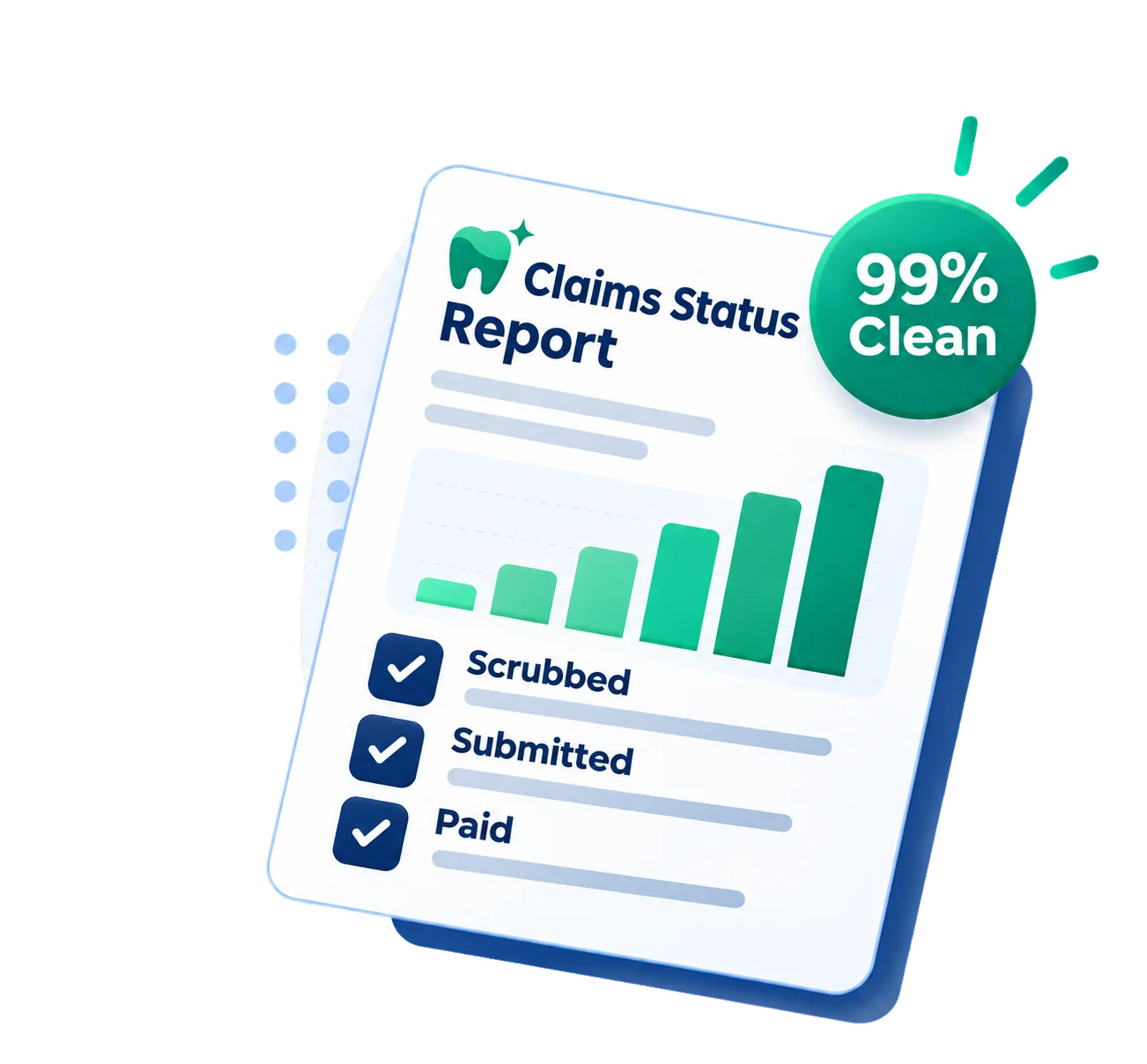
Our clean claim rate is supported by benefit, coding, tooth-data, and attachment checks completed before each claim is submitted.
Denials stay under 3% because we fix the root causes, like outdated eligibility, frequency conflicts, and missing narratives. We also watch for repeat denial patterns with each payer.
Open claims don’t wait for a month-end review. Our team checks status on a set schedule and contacts payers directly, starting with the oldest balances and those closest to their timely filing deadline.
Our net collection rate measures what we collect against what is collectible after contractual adjustments, supported by underpayment checks during posting and follow-up on every valid balance.
From solo offices to multi-location groups and DSOs, we’ve supported practices across general and specialty dentistry, so varied payer mixes and claim volumes are nothing new to us.
Our team includes certified billers, coders, claim specialists, A/R follow-up staff, and payment posters, so people trained for each stage handle the claim.
Each specialty has its own claim rules. Beyond general dentistry, we bill endodontics, periodontics, oral surgery, pediatric dentistry, and other specialties and subspecialties, following each one’s rules.
We work inside Dentrix, Open Dental, Eaglesoft, Curve Dental, and other systems, so your claims, attachments, and payments stay in the software your team already uses.
 99%Clean Claim Rate
 48-HourDenial Review
 22 DaysAverage A/R
A paid dental claim can still be taken back if the chart doesn’t support every code. So our certified coders work from the clinical record, not the treatment plan, reviewing chart notes, radiographs, and perio charting before assigning any code. That way, your dental claims go out accurate, ready for first-pass acceptance, and able to hold up if a payer reviews them later. Our pre-submission coding and scrubbing checks include:

Retired or mismatched codes lead to rejections and denials, so we validate each code against the CDT version in effect on the date of service.
Incomplete tooth data stalls claims, so we check tooth numbers and letters, surface combinations like MOD, and quadrant, arch, or area codes where required.
Some codes draw closer payer scrutiny, so we add a second review for SRP (D4341/D4342), crowns (such as D2740), and core buildups (D2950) before submission.
Payers often deny codes they can’t verify. We link radiographs, perio charts, and narratives to the codes they support, and add ICD-10-CM codes when payers require them.
Code pairs and plan limits cause avoidable denials, so we flag bundling conflicts, code levels the chart can’t support, frequency limits, and expected alternate benefit downgrades.
Most medical plans don’t accept CDT codes, so we cross-code qualifying procedures, like oral surgery, biopsies, and sleep apnea appliances, to CPT or HCPCS with supporting ICD-10-CM diagnoses.
What Payers Commonly Request

An aging report shows how long a claim has been open, but not why. For example, a claim at 45 days may be waiting on an X-ray request the payer mailed to your office, while a claim at 100 days may never have reached the payer, even though the clearinghouse accepted it. That’s why we start insurance A/R follow-up by pinpointing the cause of every open claim, because a missing X-ray just needs to be sent, while a claim the payer has no record of must be resubmitted.
Timing matters just as much. Timely filing limits vary by payer and plan, typically 90 days to a year, so we track each claim against its payer’s deadline rather than applying one follow-up rule to every claim. When a payer denies a claim as late, we use clearinghouse acceptance reports as proof of timely filing to get it reconsidered. Claims that truly can’t be recovered are written off only with a documented reason, so unpaid claims recovery never ends in silent write-offs.
Find the cause. Fix the claim. Get paid.
Claim preparation that follows each specialty’s CDT codes, attachment rules, and payer frequency limits.
Dental claims processing takes more than choosing the right CDT code. Each claim must match the procedure performed, the clinical documentation, the patient’s treatment history, and the payer’s rules, which change by specialty and plan. A generic checklist misses those differences, which is how claims end up denied, held for more information, or sent back for resubmission. That’s why we prepare every dental claim around the rules of its specialty and payer.
Across the 20+ dental specialties and subspecialties we support, these requirements vary with each treatment. For periodontal claims, we check charting and maintenance intervals, while orthodontic billing requires careful review of banding dates, age limits, and lifetime maximums. Similarly, our endodontic billing services account for tooth-specific codes and original root canal dates when retreatment is involved. Prosthodontic claims require missing-tooth and replacement checks, whereas pediatric claims depend on age-based limits for sealants and fluoride. By incorporating these specialty-specific requirements into claim scrubbing, our coders catch missing details before submission.
Specialty Rules. Clean Claims. Faster Payments.

Specialty-aware claim checks for tooth numbers, attachments, frequency limits, and age rules.
20+Right Rules · Right Claims




Clean submissions protect the claims you send tomorrow, but they don’t fix the ones already filed. Older claims still carry risks, such as payers recouping paid claims when the chart doesn’t support the code, unappealed denials missing their deadlines, and underpayments slipping through posting when no one checks them against the PPO fee schedule.
That’s why we offer dental auditing services to review your recent claims, rejections, denials, and open insurance A/R. Each problem is traced to its source, whether coding, documentation, eligibility, or posting, so the fix carries into every claim we process from that point on.

Recurring errors and reasons for nonpayment.
Codes checked against chart notes and attachments.
Unpaid claims with a path to recovery.
Payments compared with contracted PPO fees.
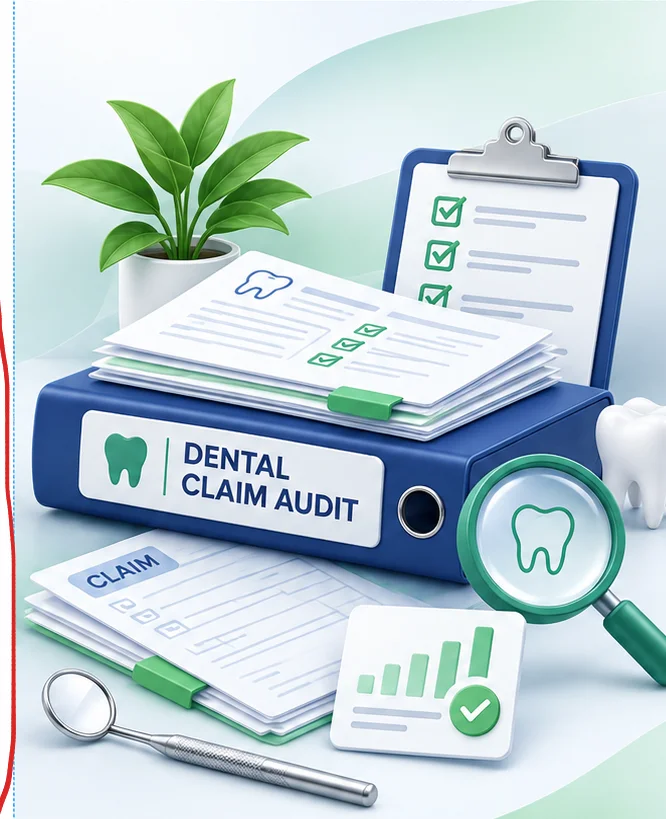
Without new logins, platforms, or team training, we process dental claims through your PMS, clearinghouse, and payer portals.














Trusted by dental practices to keep patient data secure from claim submission to revenue collection.

 Denial Review
48hr
 Claims Scope
 86%
 Insurance A/R Recovered
From attachment-related rejections to missed secondary claims and delayed orthodontic payments, hear how practices have improved their claims workflows with MedsDental.

Dr. Russ Spencer, DDS
Roots & Grins Family Dentistry
“Crown and buildup claims kept coming back asking for X-rays we thought we’d sent. MedsDental now matches each attachment and narrative to the procedure before the claim goes out and checks the clearinghouse reports every day. Our resubmissions have dropped, and our front desk finally stopped spending afternoons on hold with payers.”


Dr. Arlie Fadel, DDS
Giggle Teeth Studio
“Many of our young patients are covered under both parents’ plans, and secondary claims kept slipping through after the primary paid. Since we outsourced to MedsDental, balances that used to sit for months now get resolved, because they confirm the birthday rule before the visit, send the secondary claim with the primary EOB, and check the payment against the plan’s COB rules.”

Dr. Rosamond Runte, DMD
FlexBite Orthodontics
“Orthodontic benefits don’t pay all at once, and we were missing continuation claims after the initial banding payment. MedsDental tracks each case’s payment schedule, lifetime maximum, and age limit, and files every continuation claim on time. For the first time, our ortho A/R matches what payers actually owe us.”
Real practices. Real claims. Results your team can see.

Switching to MedsDental doesn’t mean starting over. We pick up claims already in progress, work within your existing systems, and keep the transition organized so collections don’t lose momentum. Here’s how it works:
A business associate agreement (BAA) comes first, followed by secure access to your PMS, clearinghouse, and payer portals.
Every pending claim is documented at handoff, including its status and next steps, so outstanding work doesn’t fall through the cracks.
Before taking over new submissions and pending claims together, we confirm your payer list, fee schedules, and attachment workflows.
Cleaner Claims. Steadier Cash Flow.
Clear answers on submissions, rejections, attachments, secondary claims, and timely filing.
The denture insurance claims process starts with a benefits check and, when needed, a predetermination. Dentures are usually a major service, so waiting periods, replacement limits (often five years), and missing-tooth clauses can apply. Most payers want the delivery date as the date of service, so check the plan’s policy before filing.
Dental claims work by turning completed treatment into a payment request. The practice adds CDT codes and submits the claim electronically through a clearinghouse, or on the ADA Dental Claim Form when needed. The payer checks it against the plan, sends an ERA or EOB, and pays its share, leaving any remaining balance as patient responsibility.
End-to-end dental claims processing covers everything from the eligibility check to the final posted payment. Before submission, that means benefits verification, CDT coding, claim scrubbing, and attachments. Afterward, the work continues with fixing rejections, tracking status, appealing denials, filing secondary claims, and reconciling every ERA and EOB. That’s what full dental claims management looks like.
Dental claims get rejected at the clearinghouse when they fail data or format checks, so the payer never sees them. Common causes include wrong subscriber or payer IDs, birth date errors, invalid CDT codes, missing tooth or surface details, and NPI or tax ID mismatches. Check rejection reports daily and resubmit to protect filing deadlines.
Crowns, core buildups, periodontal procedures, implants, bridges, dentures, and surgical extractions often need attachments. These include pre-op X-rays, perio charts, photos, or narratives. Most practices send them electronically through an attachment service and add the reference number to the claim. The ADA Dental Claim Form’s remarks field helps with notes but doesn’t replace required records.
A clean claim rate is the percentage of claims accepted on first submission, with no errors, corrections, or requests for more information. Divide those claims by total claims submitted and multiply by 100. Aim for 95% or higher; strong billing teams reach 98% or higher. Eligibility errors, coding mistakes, and missing attachments reduce this percentage.
File the secondary claim only after the primary plan processes it. A patient’s own plan pays first, and for children, the birthday rule usually applies unless the parents are separated or divorced. Send the secondary claim with the primary EOB, so the secondary plan can pay under its COB method, such as carve-out or non-duplication.
Timely filing is the deadline a payer sets for receiving claims, usually from the date of service. Limits vary by payer, and corrected claims, secondary claims, and appeals often have separate ones. Revenue slips when rejections go unfixed, claims go untracked, or follow-up starts late, and in-network practices usually can’t bill patients for late-filing denials.
Fewer rejections. Faster reimbursement. That’s the MedsDental promise.


 D4341/