

FMX Dental Code: D0210 Full Mouth X-Ray Guide for Accurate Billing
Dental radiographs are essential for accurate diagnosis and treatment planning. However, correct coding determines whether dental practices receive proper reimbursement for imaging services. The FMX dental code is one of the most frequently used radiographic codes in dentistry and plays a key role in comprehensive oral examinations.
The FMX dental code refers to a full-mouth radiographic series used to capture detailed images of teeth, roots, and supporting bone structures. Dentists rely on this diagnostic imaging when evaluating new patients, assessing periodontal conditions, and identifying hidden dental problems that are not visible during a clinical exam.
What Is FMX Dental Code D0210?
The FMX dental code D0210 represents a complete intraoral radiographic series used for comprehensive dental diagnosis. It generally includes 14 to 22 periapical and bitewing radiographs that capture the crowns, roots, and supporting alveolar bone of all teeth. Dentists use this imaging series to detect cavities, bone loss, infections, and other conditions that affect overall oral health.
Key Takeaways
-
The FMX dental code D0210 represents a complete intraoral radiographic series.
-
A full mouth series typically includes 14 to 22 diagnostic radiographs.
-
Dentists use the FMX dental procedure code for comprehensive exams and treatment planning.
-
Insurance coverage usually allows the imaging procedure every three to five years.
-
Avoid billing individual radiograph codes together with the dental code for FMX to prevent claim denials.
CDT Classification for the FMX Dental Code
The CDT dental code for FMX is officially identified as D0210 in the Current Dental Terminology system maintained by the American Dental Association. This standardized coding system ensures consistent documentation and billing across dental practices in the United States.
The FMX ADA dental code represents a complete intraoral radiographic examination rather than individual images. Because this imaging series provides a comprehensive diagnostic view, insurance carriers classify it differently from single radiographs such as periapical or bitewing images.
What Images Are Included in a Full Mouth Series?
The FMX dental procedure code describes a complete diagnostic set of intraoral radiographs. The exact number of images can vary depending on the patient’s clinical needs, but the goal is to capture a detailed view of the entire mouth.
Typical radiographs included in a full mouth series include:
-
Periapical radiographs showing the entire tooth and surrounding bone
-
Posterior bitewing radiographs used to detect interproximal cavities
-
Diagnostic views of roots and supporting bone structures
-
Radiographs that help evaluate periodontal bone levels
-
Images used for comprehensive dental diagnostic imaging
These radiographs collectively provide dentists with the information needed for accurate diagnosis and long-term treatment planning.
When Should Dentists Use the FMX Dental Code?
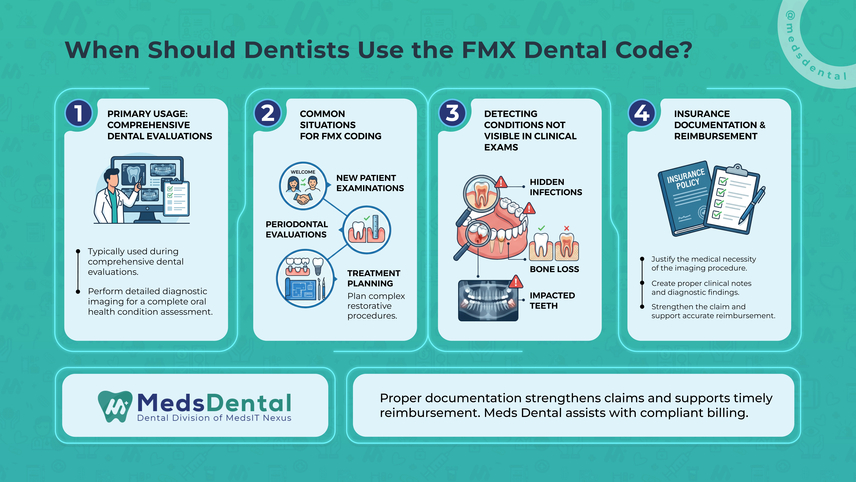
The dental code for FMX is typically used during comprehensive dental evaluations. Dentists often perform a full mouth series when detailed diagnostic imaging is required to assess a patient’s oral health condition.
Common situations where the dental FMX code may be used include new patient examinations, periodontal evaluations, and treatment planning for complex restorative procedures. The imaging series can also help detect hidden infections, bone loss, and impacted teeth that may not be visible during a routine clinical exam.
In many cases, insurance providers expect documentation supporting the medical necessity of the imaging procedure. Proper clinical notes and diagnostic findings strengthen the claim and support accurate reimbursement.
FMX and Pano Dental Code: Key Differences
Dental practices often compare the Full Mouth Series (FMX) and panoramic radiographs, including their respective imaging codes, as both serve different diagnostic purposes.
|
Code |
Imaging Type |
Primary Purpose |
|
D0210 |
Full mouth intraoral series |
Comprehensive diagnostic evaluation |
|
D0330 |
Panoramic radiograph |
Broad overview of jaws and facial structures |
|
D0274 |
Bitewing radiographs |
Detect cavities between teeth |
The FMX and pano dental code differ mainly in the type of images produced. A full mouth series consists of multiple intraoral radiographs that provide detailed diagnostic information, while panoramic imaging captures a single wide image of the jaw and surrounding structures.
Because of these differences, the dental code for FMX and pano should never be used interchangeably when submitting dental claims.
Insurance Coverage for the FMX Dental Code
Insurance coverage for the code for FMX dental procedures usually falls under diagnostic or preventive services. Many dental insurance plans allow coverage for a full mouth series once every three to five years, although policies may vary between carriers.
Insurance providers typically require documentation showing why the imaging series was necessary for diagnosis or treatment planning. When documentation is incomplete, claims involving the FMX code dental procedure may be delayed or denied.
Verifying coverage before performing the imaging procedure can help practices avoid billing issues and improve claim approval rates.
Related Dental Radiograph Codes Dentists Should Know
When a full radiographic series is not required, dentists use individual dental radiograph codes instead of the dental code FMX.
Important dental X-ray codes include:
• D0220 for the first periapical radiograph
• D0230 for each additional periapical radiograph
• D0272 for two bitewing images
• D0274 for four bitewing radiographs
• D0330 for panoramic radiographic imaging
These codes allow dentists to bill specific radiographs when a comprehensive series is not clinically necessary.
Common Billing Errors With the FMX Dental Code
Incorrect billing practices can lead to claim denials and reimbursement delays. One common mistake occurs when practices bill individual radiograph codes together with the FMX dental code for the same imaging set.
Insurance providers consider this practice unbundling because the full mouth series already includes the radiographs that make up the diagnostic set. Submitting codes such as D0220 or D0274 along with D0210 often results in rejected claims.
Proper coding protocols and clear documentation help dental practices avoid these errors. At MedsDental, accurate coding workflows help providers maintain compliance while reducing claim processing issues associated with diagnostic imaging procedures.
Documentation Requirements for Accurate Claims
Strong documentation supports successful reimbursement for the FMX dental code procedure. Dental practices should maintain detailed patient records explaining why comprehensive radiographic imaging was required.
Clinical notes should include diagnostic findings, treatment planning considerations, and interpretation of the radiographic images. Proper chart documentation also confirms that the imaging series captured the entire mouth as required by CDT coding guidelines.
Maintaining organized dental imaging documentation improves claim approval rates and supports long-term practice compliance.
How Meds Dental Can Help
At MedsDental, we assist dental practices in accurately coding the FMX dental code D0210 and related radiographs. Our team ensures proper documentation, reduces claim denials, and streamlines billing workflows so you can focus on patient care with confidence.
FAQs
1.What does FMX stand for in dentistry?
FMX stands for Full Mouth X-ray Series, a complete set of intraoral radiographs under D0210.
2. What is the difference between D0230 dental code and D0220 dental code?
D0220 is the first periapical image, while D0230 is each additional periapical radiograph.
3. What is the difference between D0330 pano dental code and D0210 dental code?
D0210 is a full-mouth intraoral series; D0330 is a single panoramic radiograph of the jaws.
4. What is the dental code for FMX and pano imaging?
D0210 covers full-mouth series; D0330 is used for panoramic imaging.
5. How many X-rays are included in a full mouth series?
A full mouth series (FMX) typically includes 14 to 22 dental X-ray images, depending on the patient’s diagnostic needs and oral health condition.
6. How often can insurance cover the FMX dental code?
Most plans allow D0210 coverage every 3–5 years, depending on medical necessity and policy limits.
7. Can I bill a full-mouth series and individual X-rays together?
No. Billing D0210 with individual codes like D0220 or D0274 is considered unbundling and may cause claim denials.


.jpg)