.jpg)
D6245: Porcelain Pontic Coding Guide for U.S. Dental Practices
Claim denials for bridge cases often have one common root issue, i.e., incorrect use of the D6245 dental code. Most of the practices do not understand what this code actually means, especially when it comes to dealing with multi-unit bridges or material classifications. Delays in reimbursement are nearly certain in the case of incorrect billing.
The D6245 dental code description refers specifically to a porcelain or ceramic pontic used in a fixed partial denture. As specified under ADA code D6245, this artificial tooth replaces a missing unit and is supported by adjacent teeth or implants. It is important not to confuse this dental reference with unrelated ASTM or automotive identifiers that share the same number. In dentistry, D6245 strictly belongs to CDT prosthodontic coding.
Key Takeaways
-
Accurate use of D6245 dental code ensures proper reimbursement for porcelain or ceramic pontics and reduces claim denials.
-
Detailed clinical documentation, radiographs, and preauthorization support improve insurance verification process and claim approval rates.
-
Compliance with ADA CDT coding guidelines and adherence to bundling rules strengthen dental revenue cycle management.
-
Understanding coding nuances and material distinctions enhances practice efficiency, patient care, and overall financial outcomes.
What Is D6245 in Dental Coding and What Does It Cover?
The CDT code D6245 represents a pontic fabricated entirely from porcelain or ceramic materials. In simple terms, it is the artificial tooth portion of a dental bridge, which is made to fill a missing tooth space. The dental code D6245 does not refer to crowns fitted on abutment teeth; it is limited only to the pontic unit itself.
From a material standpoint, this code typically includes high-strength ceramic options such as zirconia or lithium disilicate. These materials are classified under broader crown material classification systems used in restorative dentistry billing. Aesthetics and biocompatibility are the prime reasons why ceramic pontics are chosen when compared to metal-based options.
It is also important to distinguish this code from metal-supported options within prosthodontic billing codes, such as porcelain-fused-to-metal pontics. Material accuracy directly impacts claim processing and reimbursement. Misreporting the material type can trigger delays or partial payments during adjudication.
Clinical Scope & When D6245 Is Used
The D6245 dental code is primarily used in fixed bridge procedures to replace missing teeth using porcelain or ceramic pontics. Such restorations restore both function and aesthetics, particularly in the anterior region where appearance is crucial. A pontic is held by the neighboring teeth or implants, which makes it stable while maintaining natural alignment.
It is very important to select the appropriate material. Porcelain and ceramic pontics offer high-strength durability along with a natural tooth-like appearance, setting them apart from metal-based alternatives. Proper documentation of the edentulous space and supporting abutments is essential to justify the procedure. This covers clinical notes, intraoral images, and radiographs, aligning with clinical documentation standards.
In certain cases, such as multiple missing teeth in a row or complex implant-supported bridges, careful consideration of pontic design is required. The pontic crown procedure must account for occlusion, tissue support, and ease of maintenance. D6245 is considered to be an accurate reporting code for porcelain or ceramic pontics as opposed to other CDT codes, such as D6240, which includes metal-based units.
How Should D6245 Be Billed and Reported Per Unit?
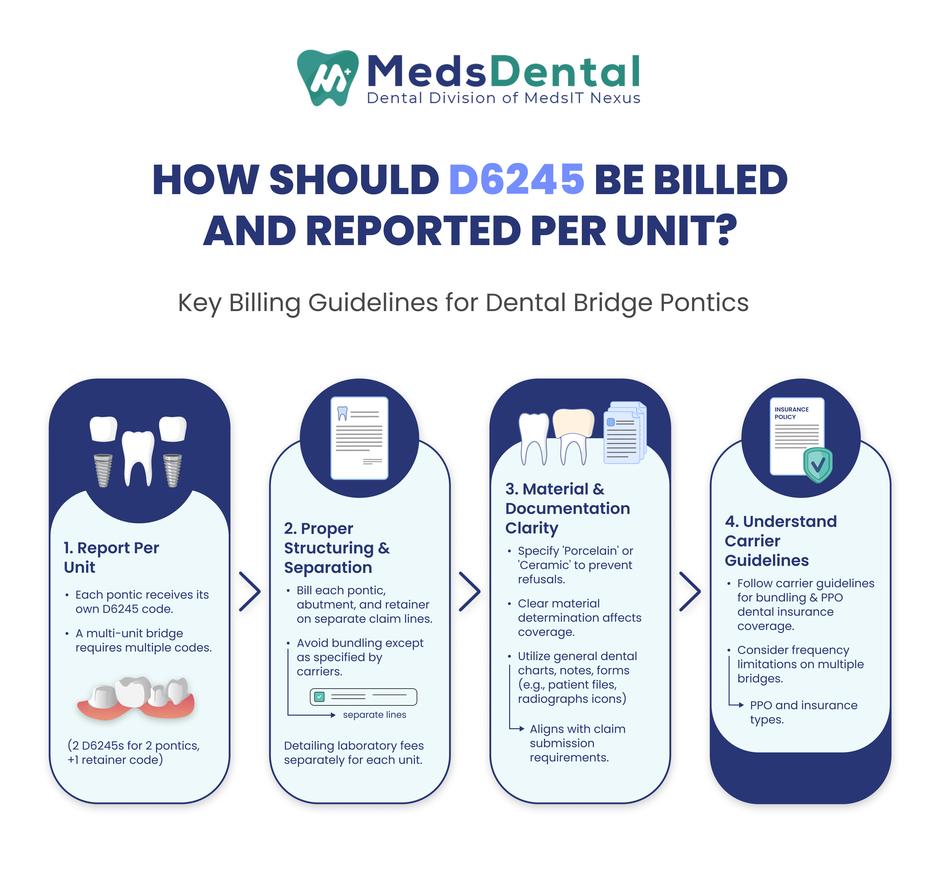
It is essential to accurate bill CDT code D6245 for improving reimbursement and avoiding claim denials. Each pontic in a multi-unit bridge, and abutment crowns should be billed separately. The choice of material and documentation determines eligibility to receive coverage under dental crown insurance reimbursement policies and PPO dental insurance coverage.
Key points to consider in billing include:
-
Per unit reporting: Each pontic receives its own D6245 code.
-
Laboratory fees: Labs may charge separately; these must be listed down for clarity.
-
Material specification: Porcelain or ceramic must be specified to prevent claim refusal.
-
Bundling rules: Pontics and retainers should be billed separately except where specified in insurance guidelines.
-
Frequency limitations: Some payers impose maximum coverage limits on multiple bridges.
Proper documentation not only supports billing but also aligns with claim submission requirements and claim adjudication timelines. Meds Dental assists practices by providing tools and expertise for proper billing and compliance with CDT coding standards.
Insurance Coverage & Reimbursement in the USA
Coverage for D6245 varies depending on insurance type and network. PPO plans typically cover porcelain or ceramic pontics when medically necessary, whereas the Medicaid coverage is subject to state-based policies. Preauthorization is required to confirm eligibility and prevent claim denials.
Frequency limitations may apply to multiple bridge units. Each pontic billed under D6245 dental code must be documented separately so that it can be reimbursed accordingly. Out-of-network benefits can differ, requiring careful verification.
Understanding dental crown insurance reimbursement guidelines and maintaining detailed clinical records improve approval rates. Correct filing is also consistent with the claim adjudication timelines and helps to minimize payment delays, which makes revenue cycle management process smoother for U.S. dental practices.
What Documentation Is Required to Get D6245 Claims Approved?
D6245 dental code claims should be properly documented. Clinical notes should well describe the missing tooth, pontic material and supporting abutments. Intraoral or radiographs provide visual evidence of medical necessity.
Detailed submission and prior authorization are helpful in avoiding claim denials. Notes must also comply with clinical documentation standards and demonstrate that each pontic is medically necessary.
Following insurance verification process efficiently and maintaining uniform records minimizes administrative errors. Proper documentation makes compliance easier, increases chances of approval, and aligns billing with ADA CDT coding guidelines in order to maximize reimbursement for porcelain or ceramic pontics.
Compliance & Revenue Impact
Accurate use of D6245 dental code is essential for dental practice compliance. Claim denials, delay in reimbursements as well as regulatory issues can be caused by misreporting pontic materials or incorrectly bundling units. Proper coding ensures alignment with ADA CDT coding guidelines and supports HIPAA-compliant billing processes.
Following points highlight actionable compliance steps:
-
Verify each pontic unit individually before submission.
-
Maintain detailed clinical and laboratory records.
-
Follow bundling and unbundling rules strictly.
-
Ensure all preauthorization and frequency limitations are documented.
-
Monitor denial trends to optimize dental revenue cycle management.
Frequent audits and staff training minimize errors, improve claim approval rates, and safeguard overall revenue.
How Meds Dental Can Help
Meds Dental makes sure that your practice bills D6245 pontics correctly, minimizes claim denials and maximizes reimbursement. We save you time and protect your revenue with our expertise in documentation and coding. This helps you to concentrate on providing quality patient care.
Frequently Asked Questions
1. What is the D6245 dental code?
D6245 is a CDT code for a porcelain or ceramic pontic in a fixed dental bridge. It replaces a missing tooth and is supported by adjacent teeth or implants. It is different from metal-based pontics like D6240.
2. Does insurance cover D6245 in the USA?
Coverage varies. PPO plans usually cover porcelain/ceramic pontics if medically necessary. Medicaid coverage depends on the state. Preauthorization and proper documentation help get approval faster.
3. How many times can D6245 be billed for a bridge?
Each pontic in a multi-unit bridge must be billed separately. Frequency limits may apply depending on the patient’s insurance policy.
4. What documentation is needed for D6245 claims?
Submit clinical notes, radiographs, and intraoral images showing the missing tooth and supporting abutments. Preauthorization strengthens the claim.
5. Can D6245 be used for front and back teeth?
Yes. The code applies to any tooth location as long as the pontic is porcelain or ceramic. Material type, not position, determines the code.